Ice Bath Setup: From Bag-of-Ice DIY to Plunge Tubs
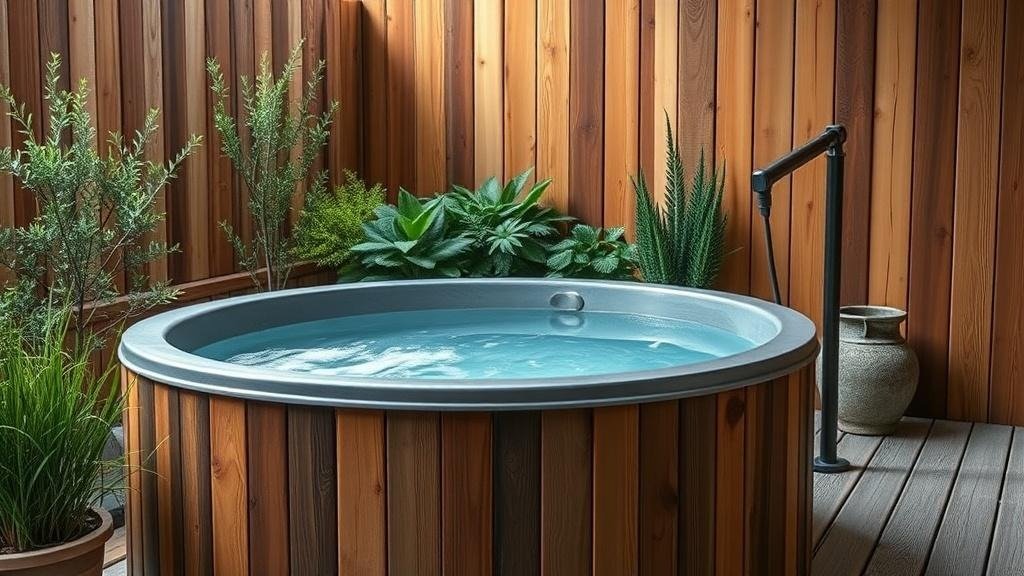
Ice Bath Setup: From Bag-of-Ice DIY to Plunge Tubs is worth evaluating through the homeowner’s real week, not a perfect catalog photo. The best setup is the one that gets used, stays safe, and does not become a maintenance headache.
A buddy of mine, Greg, lives outside Minneapolis and spent last February filling a Rubbermaid stock tank on his back patio with garden hose water and two bags of ice from the Kwik Trip down the road. He’d sit in it for three minutes, towel off, walk inside shaking, and tell his wife it was “the best he’d felt all week.” By April he’d done this maybe forty times. By May he was pricing out dedicated cold plunge tubs with integrated chillers because, in his words, “hauling ice is a part-time job I didn’t sign up for.” His experience is more common than the glossy Instagram reels suggest. The leap from a DIY ice bath to a purpose-built setup is less about wellness ambition and more about logistics fatigue.
So here is the direct answer. An ice bath project is a real home upgrade, not a vanity buy, when the basics are executed properly: right footprint for your space, chiller matched to volume, a stable pad underneath it, and any 240V electrical work routed through a licensed electrician. Most home builds land between $2,490 and $16,980 depending on size, materials, and chiller class. Everything below is the long answer.
The Spec Sheet Is Where People Get Fooled
Buyers researching cold plunge setups tend to fixate on the tub itself and underestimate how much the chiller specification varies across price tiers. An entry-tier unit at $2,500 might ship with a 1/4 horsepower chiller that can barely recover after a single five-minute session. A mid-tier unit at $6,000 typically packs 1/2 to 3/4 horsepower of cooling capacity, which handles single-user residential use without breaking a sweat (no pun intended).
Here’s what to actually read on a product page before you commit:
Target water temperature should be 45°F to 55°F. Sessions run 3 to 5 minutes for most protocols. A basic tub fill without a chiller needs 20 to 40 pounds of ice. Optional chiller upgrades matter most for repeat sessions or hot climates.
The catch is that an ice bath purchase is half product spec and half site decision. The same $5,000 kit can feel like a steal on a well-prepped concrete pad with a clean dedicated circuit, and a frustrating money pit on settled gravel with an undersized outlet shared by a shop vac.
On the chiller side specifically, check HP, filtration micron rating, ozone and UV sanitation capability, and tub material. A 1/3 HP chiller can hold 50°F in a small insulated tub in a temperate climate. Put that same unit in a garage in Phoenix in August and it will run constantly, burn through electricity, and die young.
If you’re also looking at contrast therapy with a sauna component, pay attention to wood species and joinery. Pre-cut tongue-and-groove cladding in cedar, hemlock, thermo-aspen, or redwood is the standard. Cheap builds skip the tongue-and-groove for butt joints with felt. Those leak heat and look tired within two seasons.
What the Research Actually Says (and Doesn’t)
Cold-water exposure research has matured quickly. It hasn’t matured enough for anyone to call it settled.
Heinonen and Laukkanen reviewed cold-water immersion outcomes in 2018 (Frontiers in Physiology) and reported reductions in self-reported muscle soreness, modest improvements in mood, and changes in catecholamine signaling after 2 to 5 minute immersions at 50°F to 59°F. The mood piece is what hooks most recreational users. The soreness reduction is what hooks athletes.
A 2022 systematic review by Allan and colleagues (European Journal of Applied Physiology) looked at cold-water immersion after resistance training and reported recovery benefits, with one important caveat: very frequent immersions immediately after lifting may blunt some hypertrophy signaling. The practical takeaway for home users is to keep cold sessions between 2 and 5 minutes and separate them from heavy resistance training by 4 hours or more when muscle growth is a priority.
Cardiovascular response is real and worth respecting. Cold exposure spikes heart rate and blood pressure within seconds. Think of it like jumping into a cold lake as a kid, except you’re 47 now and possibly on blood pressure medication. Adults with arrhythmias, uncontrolled hypertension, Raynaud’s phenomenon, or who are pregnant should clear cold immersion with a physician before any home use. Period.
My honest take: the research is encouraging enough for healthy adults to experiment with short cold exposure, but anyone telling you it’s a proven treatment for depression, autoimmune disease, or metabolic syndrome is outrunning the data by a mile.
Pad, Electrical, and the Stuff Nobody Wants to Talk About
An ice bath install is simpler than a full sauna build because most modern home units run on a standard 110V outlet. The integrated chiller, ozone, and filtration components come factory-wired. Your job is the pad, the water fill, the GFCI outlet, and the ongoing maintenance.
The pad. This is the part most people underestimate. A full tub of water sitting on a steel or composite chassis can put 800 to 1,200 pounds on a small footprint. A 4-inch compacted gravel pad with a drainage layer works for many backyard installs. A 4-inch reinforced concrete pad is the right call on soft soil or in freeze-thaw climates. Greg’s first stock tank sat on bare lawn. By spring it had sunk two inches on one side and the water line looked like a spirit level with a grudge.
Electrical. Plug the unit into a properly grounded GFCI outlet on its own circuit. If your nearest outlet is more than 25 feet away or shares a circuit with high-draw appliances, a licensed electrician should run a dedicated 20A 110V circuit. Some commercial-grade chillers are 240V models that always require a licensed electrician. Don’t freelance this.
Water care. Most home cold tubs combine ozone, UV, and a 5-micron filter cartridge to keep water clear for 6 to 12 weeks between drains. Test pH and sanitizer weekly. Drain and refill on the manufacturer’s schedule. The boring truth is that water maintenance is the make-or-break habit for long-term ownership satisfaction.
What It Actually Costs (All-In, Not Sticker Price)
An ice bath purchase is the kind of home buy where the all-in number matters more than whatever’s on the product page. Budget the unit, the pad, the wiring, any permits, and a small reserve for accessories and first-year maintenance.
On the cold plunge side, expect $4,500 to $7,500 for a residential insulated tub with an integrated chiller, and $9,000 to $14,000 for a commercial-grade stainless build with full filtration. Stock-tank DIY setups land closer to $400 to $900 but require manual ice, which gets old fast (see: Greg).
If you’re building out a full contrast therapy setup with a sauna, expect $2,490 for an entry barrel kit, $6,000 to $10,000 for a mid-tier cabin with a quality heater, and $12,000 to $16,980 for a panoramic glass-front or premium thermo-aspen build. Add $400 to $900 for a gravel pad, $1,200 to $2,400 for a concrete pad, and $600 to $1,800 for a 240V electrical run.
Appraisers don’t add dollar-for-dollar return on a wellness setup, but a well-built outdoor sauna and cold plunge is treated as a selling feature in Northeast and Pacific Northwest markets.
On the tax side, some home wellness equipment can be reimbursed through HSA or FSA accounts when a Letter of Medical Necessity (LMN) is on file. TrueMed and similar third-party services issue LMNs after a short clinician review for conditions where heat or cold therapy is a recognized treatment input. Eligibility is patient-specific and IRS rules are strict. Talk to your tax advisor before assuming a purchase will qualify.
How Plunge Tubs Stack Against the Alternatives
The tradeoffs come down to footprint, install effort, temperature consistency, and whether you’ll actually maintain the routine.
A purpose-built insulated tub with a 1 HP chiller holds 39°F to 45°F all day with no manual ice. A stock-tank DIY can hit the same temperatures with ice, but you’re buying and hauling bags every session. A chest-freezer conversion is cheap but lacks filtration and is mechanically marginal (and voids the warranty, obviously).
On the sauna side for contrast therapy, an outdoor barrel heats in 25 to 35 minutes and lives on a small pad. An indoor cabin heats faster but takes living space and venting. An infrared cabin runs at lower temperatures (120°F to 150°F) and plugs into a standard outlet, but produces a different physiological response than a traditional Finnish sauna.
The right answer is rarely the cheapest unit or the most expensive one. It’s the build that matches your climate, your space, your install constraints, and the routine you’ll actually keep three months from now.
For a closer look at specific model lineups and pricing tiers, Sweat Decks’s comparison is the published reference we point readers to for full specs, pricing, and warranty information. Worth bookmarking before you start a build.
When to Call a Pro Instead of YouTube
Three moments in an ice bath project where a professional pays for themselves:
The pad. Especially in freeze-thaw climates or on soft soil. A pad that settles or cracks is far more expensive to fix once a loaded tub is sitting on top of it.
The electrical. Any 240V work. Any run longer than 25 feet. Any situation where you’re not 100% sure the circuit is dedicated and GFCI-protected.
The medical clearance. If you have an arrhythmia, uncontrolled hypertension, a recent cardiac event, Raynaud’s phenomenon, are pregnant, or manage a chronic condition, a 10-minute conversation with your physician is the correct first step before starting a cold plunge routine. The research is encouraging for healthy adults. It is not blanket medical permission.
See also: Comfortable Fashion for Busy Lifestyles
FAQs
What is the lifespan of a quality ice bath setup?
Stainless-steel cold plunge tubs last 15 to 20 years with proper care. Chillers are typically replaced or rebuilt every 6 to 10 years. Cedar or thermo-aspen saunas (if you’re building contrast therapy) last 15 to 25 years with light annual maintenance; heaters usually get replaced once during that span.
Do I need a permit for an ice bath?
Some municipalities exempt detached structures under 200 square feet from a building permit. The electrical permit for a 240V circuit is almost always required. Call your local building department before ordering anything.
How quickly does an ice bath reach target temperature?
A cold plunge chiller pulls a freshly filled tub from tap temperature to 45°F in 3 to 8 hours depending on chiller size and starting temp. For contrast setups, a 6 kW barrel sauna reaches 170°F in 25 to 35 minutes, and a 7.5 kW cabin sauna in 30 to 45 minutes.
How long should a typical ice bath session last?
Most adults do well with 2 to 5 minutes in a cold plunge at 40°F to 55°F. For sauna contrast, 12 to 20 minutes at 170°F to 195°F is standard. Build up gradually if you’re new to either.
Can I install an ice bath on a deck?
Some smaller tubs sit on reinforced decks if the framing supports the loaded weight, often 600 to 1,200 pounds. Most larger units belong on a dedicated pad. Confirm load capacity with a structural engineer or your contractor before placing a unit on existing decking.
How often do I need to change the water?
With ozone, UV, and a 5-micron filter, most home cold plunge tubs run 6 to 12 weeks between full drains. Test pH and sanitizer weekly. If the water looks cloudy or smells off, drain it regardless of the schedule.
Is a chest freezer conversion a good budget option?
It can work as a short-term experiment, but it lacks proper filtration, voids the freezer warranty, and creates potential electrical safety issues with water proximity. For anything beyond a trial phase, a purpose-built unit with integrated sanitation is the better long-term investment.
Disclaimer. This article is general consumer information, not medical advice. Heat and cold therapies carry real cardiovascular load. Anyone with arrhythmias, uncontrolled hypertension, Raynaud’s phenomenon, recent cardiac events, or who is pregnant should consult a physician before starting any new sauna or cold-plunge routine.
HSA and FSA reimbursement on wellness equipment is patient-specific and depends on a Letter of Medical Necessity from a clinician. Talk to your tax advisor before assuming a purchase qualifies.